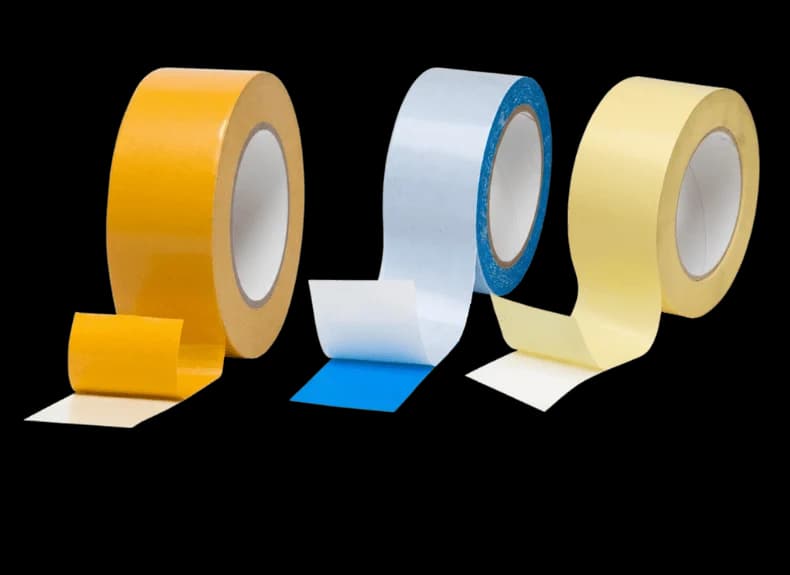



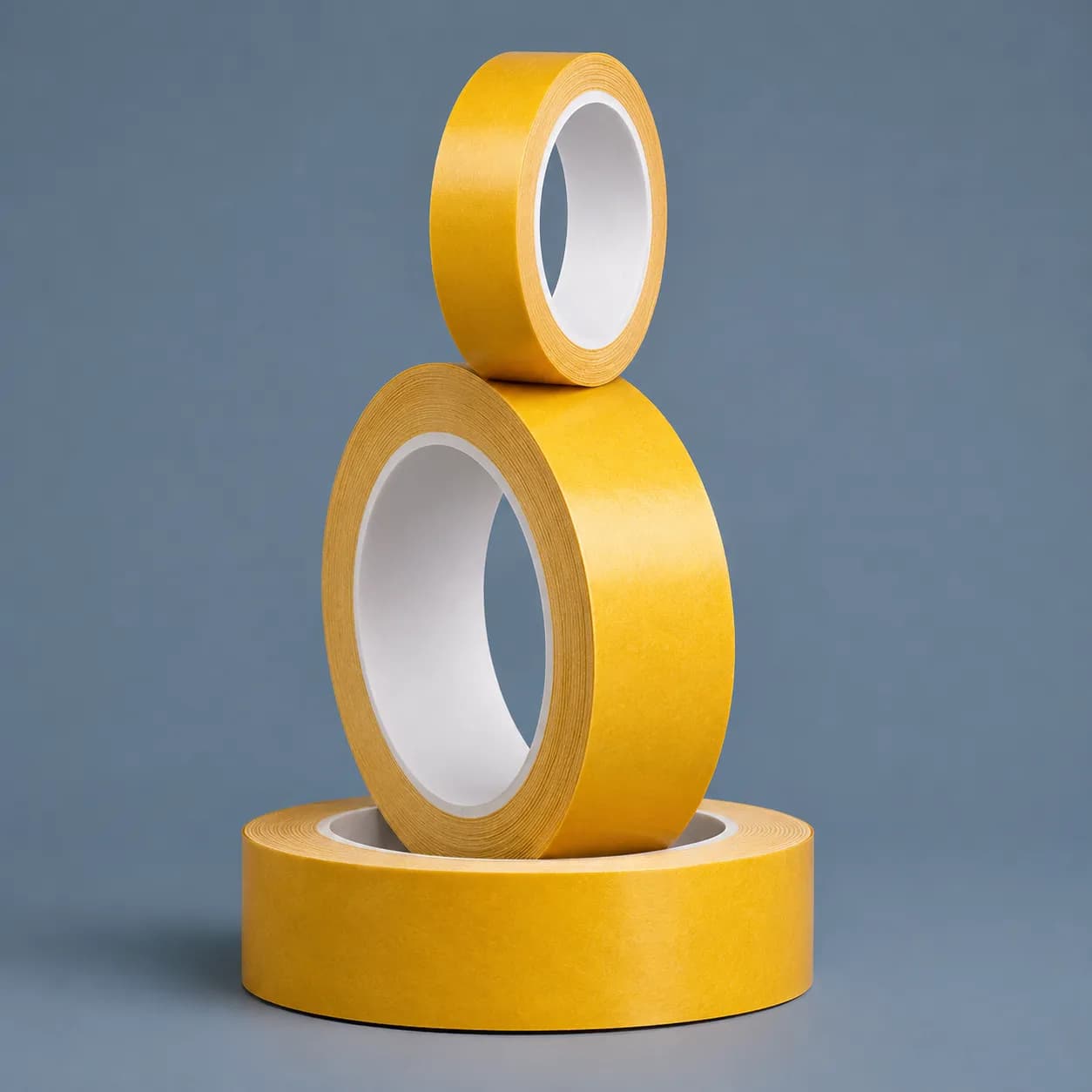
Double sided tape has adhesive on both faces, so it joins two surfaces without screws, glue or visible tape. Inside it there is usually a thin layer called the carrier, and the carrier decides how the tape behaves. Choosing the right carrier is the key to a bond that holds.
Tissue double sided tape
A thin paper-like tissue carries the adhesive. It is easy to tear by hand, flexible and economical. It suits paper and card work, packaging, stationery, light mounting, labels and general office and craft use.
Film double sided tape
A thin plastic film carrier makes the tape stronger and more stable than tissue, and it does not stretch. It suits jobs where the tape must stay flat and thin, such as nameplates, printing work, plastic parts and joining smooth materials.
Foam double sided tape
A foam carrier gives thickness and cushioning. Foam fills small gaps, absorbs vibration and holds on surfaces that are not perfectly flat. It suits mounting signs, mirrors, trims, hooks and fittings, and bonding parts that may move slightly.
Cloth double sided tape
A woven cloth carrier makes a tough, strong tape that stays put on rough and flexible materials. It suits carpets and rugs, flooring, footwear and leather work, and heavier fixing jobs.
How to choose
- What are you joining? Paper and card: tissue. Smooth plastic or metal: film or foam. Carpet, leather or fabric: cloth.
- Is the surface flat? Uneven or textured surfaces need the thickness of foam.
- Should it be invisible? Thin tissue and film tapes hide best between the parts.
- Will it carry weight or vibrate? Choose foam or cloth, and test before full production.
For any tape, clean and dry the surfaces first and press firmly: the bond comes from full contact.
From Polo Packages
Our double sided tapes come in tissue, film, foam and cloth versions for mounting, carpets, footwear, leather and paper work, 6 to 48 mm wide. Tell us what you are bonding and we will suggest the right one: request a quote.